
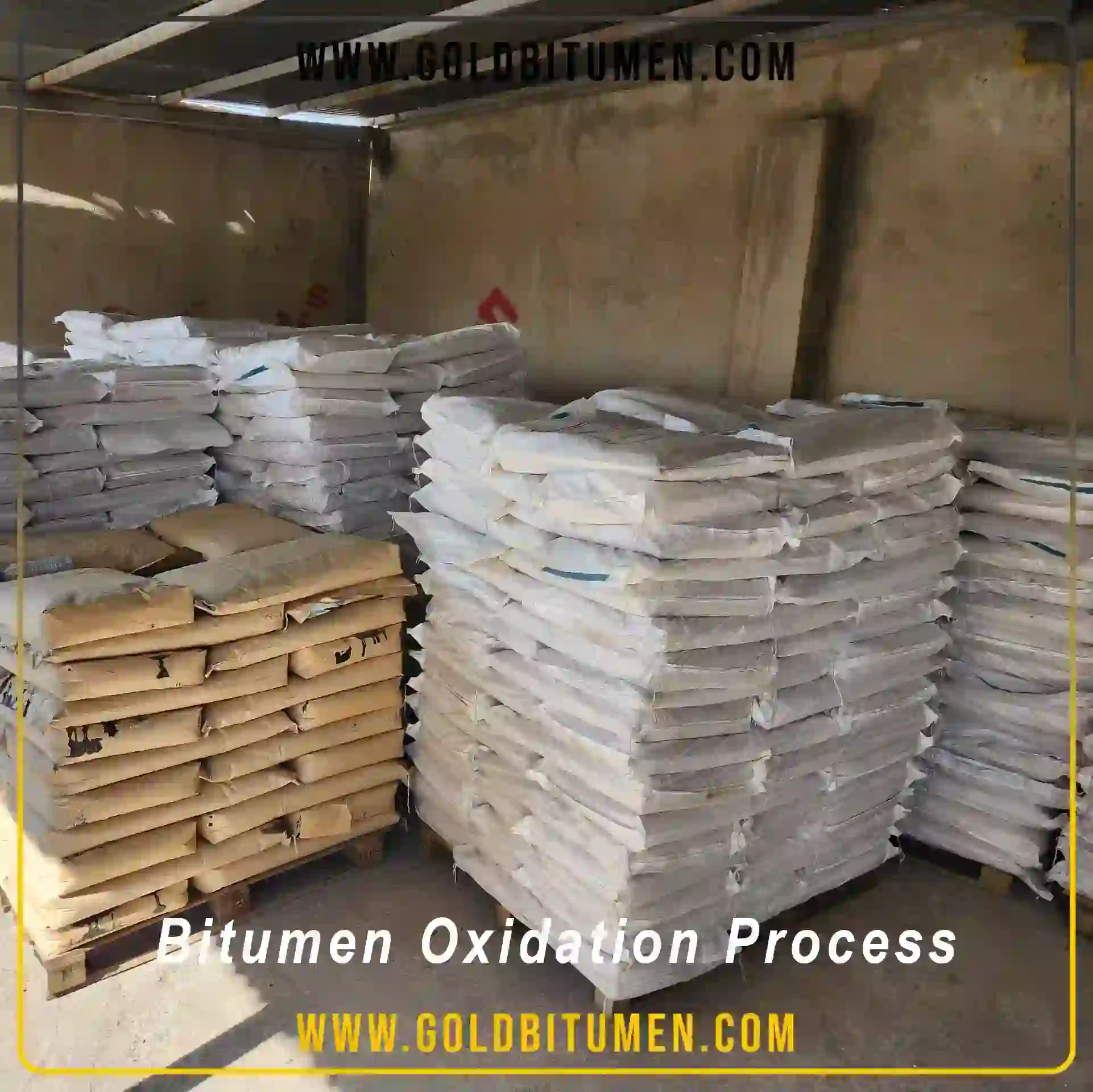
Goldbitumen, a trusted manufacturer of premium bitumen from Iran, follows controlled refining methods to produce stable and reliable grades. Because the bitumen oxidation process plays a key role in determining the hardness, durability, and long-term behavior of the binder, it is essential for engineers and buyers to understand how it works. When oxidation happens correctly, the material becomes stronger and more suitable for industrial uses. However, when it occurs unintentionally during storage or heating, it can damage the binder and reduce performance. Therefore, learning how oxidation affects bitumen helps you make better selection and storage decisions.
What Is the Bitumen Oxidation Process?
The bitumen oxidation process is a chemical reaction where oxygen interacts with the hydrocarbons in bitumen. This reaction increases molecular weight, changes viscosity, and makes the material harder. Although oxidation happens naturally over time, refineries often use a controlled method called air blowing to produce oxidized or blown bitumen.
In simple terms:
➡ Bitumen + Oxygen + Heat → Harder and more durable bitumen
Because oxidation changes the structure of bitumen, it directly affects its behavior in roofing, waterproofing, and insulation applications.
How Oxidation Changes Bitumen Properties
During the bitumen oxidation process, several important changes occur:
Viscosity increases
Penetration value decreases
Softening point increases
Elasticity decreases
Resistance to flow improves
Temperature stability rises
As a result, oxidized bitumen becomes better for applications that require heat resistance and long-term durability, such as:
membrane manufacturing
roofing sheets
pipe coating
electrical insulation
industrial adhesives
Therefore, oxidation allows manufacturers to tune the binder for specific industrial uses.
Why Refineries Use the Bitumen Oxidation Process
Refineries intentionally oxidize bitumen to meet international standards for specific grades, including:
Bitumen 85/25
Bitumen 95/25
Bitumen 90/40
Bitumen 105/35
These grades must have a higher softening point and lower penetration for industrial performance. Because natural penetration bitumen cannot reach these levels, refineries rely on controlled oxidation.
The Controlled Air-Blowing Method
The most common industrial method is air blowing, where hot air passes through vacuum bottom feedstock.
Step-by-Step Process:
Vacuum bottom is heated to around 250–300°C.
A steady flow of air is blown through the bitumen.
Oxygen reacts with the binder, increasing molecular weight.
The bitumen gradually becomes harder and more stable.
The process stops when the desired grade is reached.
Because the bitumen oxidation process must be predictable, temperature and air flow are closely monitored.
Chemical Reactions During Bitumen Oxidation
Although the process looks simple, the chemistry behind it is complex. Several reactions occur:
Oxidation: hydrocarbon molecules react with oxygen
Polymerization: molecules join together to form larger chains
Dehydrogenation: hydrogen atoms are removed
Condensation: molecules combine to create harder structures
Together, these reactions increase the bitumen’s hardness and its resistance to heat and deformation.
Benefits of the Bitumen Oxidation Process
Because oxidized bitumen behaves differently from penetration bitumen, it offers several advantages:
stronger resistance to aging
higher softening point
reduced flow at high temperatures
improved stability in membrane production
better bonding in adhesives and mastics
longer service life
greater waterproofing performance
Consequently, oxidized bitumen is preferred for industrial and roofing applications where natural bitumen fails.
Difference Between Oxidized Bitumen and Penetration Bitumen
Although both are bitumen types, they behave very differently.
| Property | Penetration Bitumen | Oxidized Bitumen |
|---|---|---|
| Softening point | Low | High |
| Flexibility | Higher | Lower |
| Flow resistance | Limited | Very strong |
| Uses | Roads, asphalt | Roofing, membrane, insulation |
| Stability in heat | Moderate | Excellent |
Because oxidized bitumen resists flow even at high temperatures, it is ideal for industrial sectors that require heat stability.
Uncontrolled Oxidation: The Hidden Danger
While controlled oxidation is beneficial, uncontrolled oxidation is harmful. This is the oxidation that happens:
inside storage tanks
during long-term heating
when exposed to air for too long
during repeated reheating cycles
Uncontrolled oxidation causes:
hardening
cracking
brittleness
loss of elasticity
early failure
Therefore, understanding the bitumen oxidation process helps you avoid accidental hardening during storage.
How to Reduce Unwanted Oxidation During Storage
To prevent harmful oxidation and maintain quality:
store bitumen at the correct temperature
avoid keeping it hot for long periods
prevent air exposure inside tanks
use nitrogen blanketing when possible
keep drums sealed tightly
avoid repeated heating cycles
These steps keep the material stable and extend its lifespan.
How Goldbitumen Ensures Controlled and Safe Oxidation
Goldbitumen uses advanced refining systems to guarantee:
consistent oxidation temperature
controlled air flow
perfectly matched softening point
stable penetration values
clean, impurity-free feedstock
accurate ASTM test results
Because of these strict controls, buyers receive oxidized bitumen that performs predictably and reliably.
Conclusion: The Bitumen Oxidation Process Shapes Industrial Performance
In summary, the bitumen oxidation process plays a major role in determining hardness, heat resistance, and long-term stability. While controlled oxidation creates high-quality industrial-grade bitumen, uncontrolled oxidation can cause damage and reduce performance. Therefore, choosing a reliable supplier like Goldbitumen ensures you receive stable, properly oxidized bitumen that meets demanding industrial requirements.