
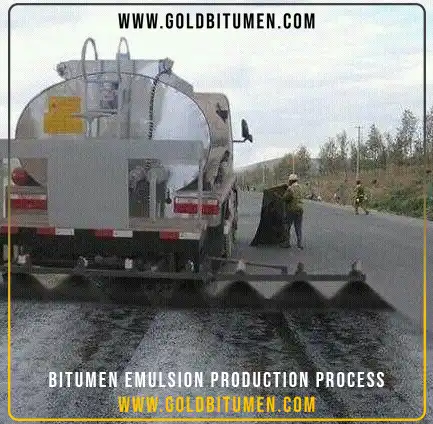
The Cutback Bitumen Production Process explains how refineries convert solid or semi solid paving bitumen into a fluid material that crews can spray, mix, and apply at lower temperatures. This process matters in real projects because many roadworks, maintenance jobs, and remote construction sites cannot heat bitumen easily or safely. By blending bitumen with controlled amounts of petroleum solvents, producers create a workable product that performs reliably in the field without complex heating systems.
Why Cutback Bitumen Is Produced
Pure paving bitumen becomes highly viscous at ambient temperature. In cold climates, remote locations, or fast paced maintenance jobs, heating bitumen creates delays, safety risks, and extra fuel costs.
Cutback bitumen solves this problem by:
Lowering viscosity for easy pumping and spraying
Allowing application at ambient temperatures
Improving penetration into base layers and aggregates
Reducing equipment complexity on site
The production process focuses on controlled dilution, not chemical reaction.
Core Materials Used in the Cutback Bitumen Production Process
Base Bitumen
Refineries usually start with penetration grade bitumen such as Btumen 60/70 or 80/100. Operators select the grade based on the final cutback type and climate conditions.
Key characteristics of base bitumen:
Stable asphaltene structure
Consistent penetration and softening point
Low water content
Proven compatibility with petroleum solvents
Petroleum Solvents
Producers use refinery grade hydrocarbon solvents, selected by evaporation rate:
Rapid curing (RC): gasoline or naphtha fractions
Medium curing (MC): kerosene range fractions
Slow curing (SC): diesel or gas oil fractions
The solvent choice directly defines the cutback category.
Step by Step Cutback Bitumen Production Process
1. Heating the Base Bitumen
Operators heat base bitumen in insulated tanks, usually between 120°C and 160°C. This temperature range allows smooth pumping without damaging the molecular structure.
Experienced operators avoid overheating because:
Excess heat accelerates aging
Oxidation increases brittleness
Final product performance suffers
Uniform heating matters more than high temperature.
2. Controlled Solvent Preparation
Refineries store solvents in separate tanks with:
Explosion proof pumps
Vapor recovery systems
Grounded transfer lines
Before blending, technicians confirm:
Flash point
Density
Absence of water or contaminants
This step prevents instability in the final product.
3. Metered Blending Operation
The actual blending defines the Cutback Bitumen Production Process.
Operators introduce solvent into the heated bitumen gradually and under constant agitation. Automatic flow meters or manual calibrated valves control the ratio.
Typical blending principles:
Add solvent slowly, never all at once
Maintain steady agitation
Avoid air entrainment
Keep temperature stable
Incorrect blending causes phase separation, foaming, or uneven curing.
4. Achieving Target Cutback Grades
Different cutback grades require precise solvent ratios:
Bitumen MC-30: lower viscosity, high penetration
Bitumen MC-70: balanced viscosity and curing
Bitumen MC-250: thicker material for heavier coatings
Bitumen MC-800 / MC-3000: high-viscosity applications
Producers adjust solvent percentage—not bitumen grade—to fine tune performance.
5. Homogenization and Stabilization
After blending, the mixture circulates for a set time to ensure full homogeneity. This step allows:
Uniform solvent distribution
Stable viscosity across the tank
Reliable performance during storage
Experienced plants never rush this stage.
Quality Control During Cutback Bitumen Production Process
Every professional Cutback Bitumen Production Process includes strict testing before release.
Common tests include:
Kinematic viscosity
Flash point
Distillation recovery
Residue penetration
Water content
Lab technicians test samples taken from actual production tanks, not pipelines, to ensure accuracy.
Storage and Handling After Cutback Bitumen Production Process
Cutback bitumen requires careful storage because solvents evaporate over time.
Best storage practices:
Sealed tanks with pressure relief
Minimal headspace
Cool, shaded locations
No open top tanks
Producers clearly label tanks to prevent mixing different cutback grades.
Packaging Options for Export and Domestic Use
Depending on logistics, producers package cutback bitumen in:
Steel drums
Bulk tankers
ISO tanks
Export shipments require:
Solvent vapor compliance
Correct UN labeling
Temperature-controlled loading
Refineries like PETRO GOLD, operating as a bitumen refinery, follow these procedures to maintain product stability during long-distance transport.
Safety Considerations in the Cutback Bitumen Production Process
The Cutback Bitumen Production Process involves flammable solvents, so safety discipline remains critical.
Key safety measures include:
Intrinsically safe equipment
Grounding and bonding
Gas detection systems
Operator training
Strict hot work permits
Plants that ignore safety usually face product loss, shutdowns, or accidents.
Environmental and Regulatory Factors
Many regions regulate cutback bitumen due to solvent emissions. Modern refineries:
Optimize solvent ratios to reduce VOCs
Use vapor recovery systems
Shift toward emulsions where required
Still, cutback bitumen remains essential where emulsions fail due to climate or site conditions.
Final Thoughts from Real Cutback Bitumen Production Process Experience
The Cutback Bitumen Production Process relies on precision, patience, and control, not shortcuts. Success depends on understanding how bitumen behaves under heat, how solvents interact with asphaltenes, and how field conditions affect curing.
When refineries respect these fundamentals, cutback bitumen delivers:
Reliable workability
Strong adhesion
Predictable curing
Consistent project results
That is why this process continues to play a critical role in real world road construction and maintenance—not in theory, but on actual job sites.