
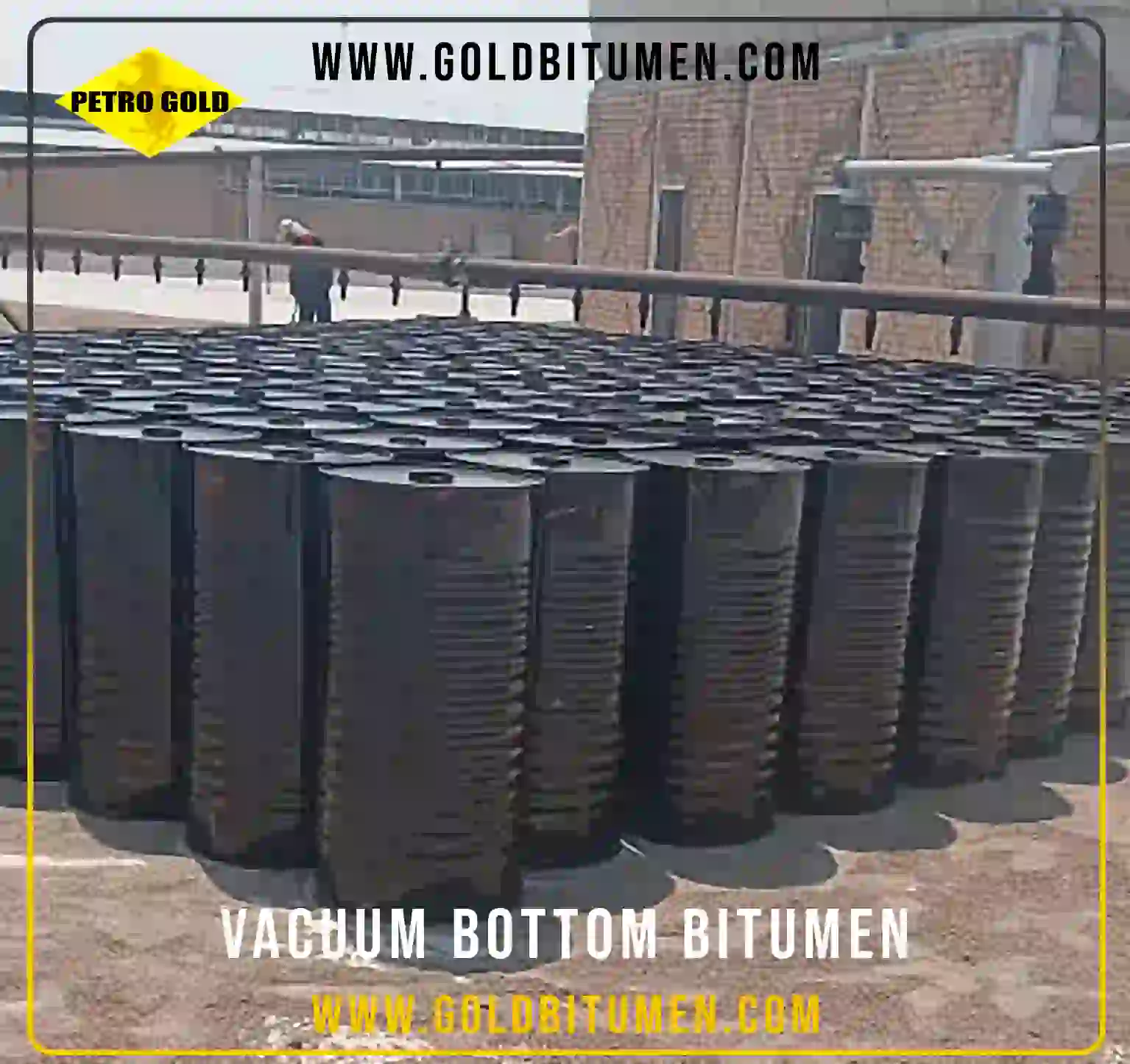
Vacuum Bottom bitumen is the backbone of modern bitumen production because it carries the heavy hydrocarbons that create strength, adhesion, and durability in pavement. VB forms when crude oil passes through atmospheric and vacuum distillation, and it becomes the main feedstock for penetration-grade bitumen, oxidized bitumen, and even polymer-modified binders. Since its chemical composition controls hardness, flexibility, and performance, Vacuum Bottom bitumen directly influences how long roads, waterproofing systems, and industrial coatings will last. Therefore, understanding its properties and behavior is essential for engineers, refiners, and construction companies worldwide.
What Is Vacuum Bottom Bitumen?
Vacuum Bottom bitumen (often called VB or Vacuum Residue) is a heavy, thick, black refinery residue produced after crude oil goes through two distillation steps:
Atmospheric distillation
Vacuum distillation
After lighter products like gasoline, diesel, kerosene, and gas oil are removed, the remaining heavy fraction becomes Vacuum Bottom. Because VB still contains valuable high-molecular hydrocarbons, refineries use it as the foundation for producing commercial bitumen grades such as:
Bitumen 80/100
Bitumen 40/50
Penetration grades for paving
Oxidized bitumen (105/35, 85/25, 90/40, etc.)
Polymer Modified Bitumen (PMB)
This is why Vacuum Bottom bitumen plays a central role in the road construction industry.
How Vacuum Bottom Bitumen Is Produced
Although the concept is simple, the production process involves precise refinery control. The steps include:
1. Atmospheric Distillation
Crude oil enters a distillation column where lighter fractions evaporate. What remains is atmospheric residue.
2. Vacuum Distillation
The atmospheric residue enters a second column under reduced pressure. Because the pressure is lower, evaporation occurs at lower temperatures, preventing cracking.
3. Collection of Vacuum Bottom
The heavy fraction at the bottom is collected as Vacuum Bottom bitumen.
Because this process happens without cracking the molecules, VB keeps its natural asphaltenes, resins, and aromatics, which gives it excellent potential for creating durable bitumen grades.
Chemical Composition of VB Bitumen
VB contains four essential hydrocarbon groups:
Asphaltenes – Provide hardness and structure
Resins – Improve adhesion
Aromatics – Give flexibility
Saturates – Balance flow and stability
A perfect balance of these groups gives Vacuum Bottom:
Strong bonding ability
Natural viscosity
Resistance to rutting and cracking
Long-term aging stability
Because of this, VB is widely used to produce high-quality paving bitumen for hot and moderate climates.
Key Properties of Vacuum Bottom Bitumen
Vacuum Bottom bitumen has several important properties that determine how it performs during bitumen production:
1. High Viscosity
It is naturally thick and heavy. This feature allows it to form powerful structural strength in the final binder.
2. High Asphaltene Content
More asphaltenes mean stronger bitumen, better elasticity after modification, and less deformation during hot weather.
3. Temperature Sensitivity
VB softens at high temperatures but hardens in cold weather. Because of this, refineries adjust its composition to meet performance-grade requirements.
4. Good Adhesion
VB bonds well with mineral aggregates, especially when used to create penetration-grade bitumen.
5. High Carbon Residue
This improves durability, water resistance, and stability in extreme conditions.
Applications of Vacuum Bottom Bitumen
Vacuum Bottom is not a final product; instead, it is the primary feedstock for many refined bitumen materials.
1. Penetration-Grade Bitumen
Most paving grades (40/50, 50/70, 60/70, 80/100) come from VB after careful processing.
2. Oxidized Bitumen
VB undergoes air blowing to produce oxidized grades used in:
Roofing
Waterproofing membranes
Paints
Adhesives
3. Polymer Modified Bitumen (PMB)
VB is mixed with polymers like SBS or EVA to produce highly elastic Polymer Modified Bitumen used for:
Highways
Airports
Heavy traffic zones
4. Industrial Applications
VB also supports the production of:
Asphalt paints
Anti-corrosion coatings
Joint sealants
Roof insulation sheets
Because of its flexibility and strength, VB is one of the most essential raw materials in the petrochemical industry.
Why Vacuum Bottom Bitumen Is So Important for Pavement Quality
Vacuum Bottom determines the final performance of any bitumen grade made from it. Therefore, its quality directly affects:
Road durability
Resistance to rutting
Resistance to cracking
Moisture protection
Aging speed
Better VB quality means better bitumen quality.
Because pavement faces heavy loads, sunlight, rain, and temperature cycles, engineers rely on Vacuum Bottom to deliver predictable performance under all conditions.
VB Bitumen and Durability Factors
The durability of VB-based bitumen depends on several factors. These include:
1. Chemical Stability
Stable asphaltene–resin balance prevents cracking and brittleness.
2. Controlled Viscosity
Correct viscosity ensures proper coating of aggregates and perfect compaction.
3. Low Oxidation Rate
VB that resists oxidation provides a much longer service life.
4. Moisture Resistance
Strong adhesion to aggregates reduces potholes and delays stripping.
5. Temperature Compatibility
Selecting the right grade for the climate keeps the pavement flexible and strong.
6. Production Quality
Mistakes during refining or blowing can damage the molecular structure.
7. Storage and Handling
Overheating or contamination weakens VB and reduces final bitumen performance.
Because all these factors work together, refineries aim to produce Vacuum Bottom with maximum purity and ideal chemical profile.
How Climate Affects VB Bitumen Performance
Different climates need different bitumen behaviors, even if the original Vacuum Bottom comes from the same crude source.
In Hot Regions
Roads face softening and rutting. Therefore, VB must be converted into harder penetration grades.
In Cold Regions
Roads face shrinkage and cracking. Therefore, VB must produce softer grades or PMB to improve flexibility.
In Humid Regions
Moisture sensitivity increases, so mixes require anti-stripping agents or adhesion promoters.
Because climate is one of the biggest performance drivers, VB-based bitumen must be tailored carefully for each region.
Advantages of Using High-Quality Vacuum Bottom Bitumen
When VB quality is high, the final bitumen product gains:
Longer service life
Better elasticity
Improved stability in heat
Stronger bonding to aggregates
More resistance to water damage
Less cracking during winter
These benefits reduce maintenance costs and increase pavement reliability.
Challenges in VB Bitumen Production
Although VB is a reliable feedstock, its production faces some challenges:
1. Crude Oil Variability
Not all crude oils produce VB with equal quality.
2. Storage Limitations
Prolonged heating can cause oxidation.
3. Transportation Concerns
If handled poorly, VB may lose essential oils.
4. Environmental Rules
Refineries must manage emissions during production.
Because of these challenges, only experienced producers maintain stable quality.
Future of Vacuum Bottom Bitumen in the Industry
As countries demand stronger, longer-lasting roads, VB will remain the essential base material for advanced bitumen technology. Although new chemicals and modifiers are emerging, VB continues to be the most efficient, natural, and cost-effective feedstock for bitumen manufacturing.
Moreover, modern technologies such as:
Polymer modification
Nano-additives
Enhanced air-blowing control
Advanced refinery optimization
are making VB-based bitumen stronger and more durable than ever.
Conclusion: Why Quality Vacuum Bottom Bitumen Matters
Vacuum Bottom bitumen plays a critical role in shaping the performance of paving-grade bitumen, oxidized bitumen, and polymer-modified materials. Because its chemical composition controls strength, flexibility, adhesion, and aging behavior, choosing high-quality VB ensures long-lasting and reliable asphalt surfaces. And since durable roads depend deeply on the purity and stability of this raw material, working with a trusted supplier is essential. Goldbitumen, as a dedicated manufacturer, provides high-quality Vacuum Bottom bitumen tailored for both industrial and road construction needs, ensuring superior performance across all climates and applications.