
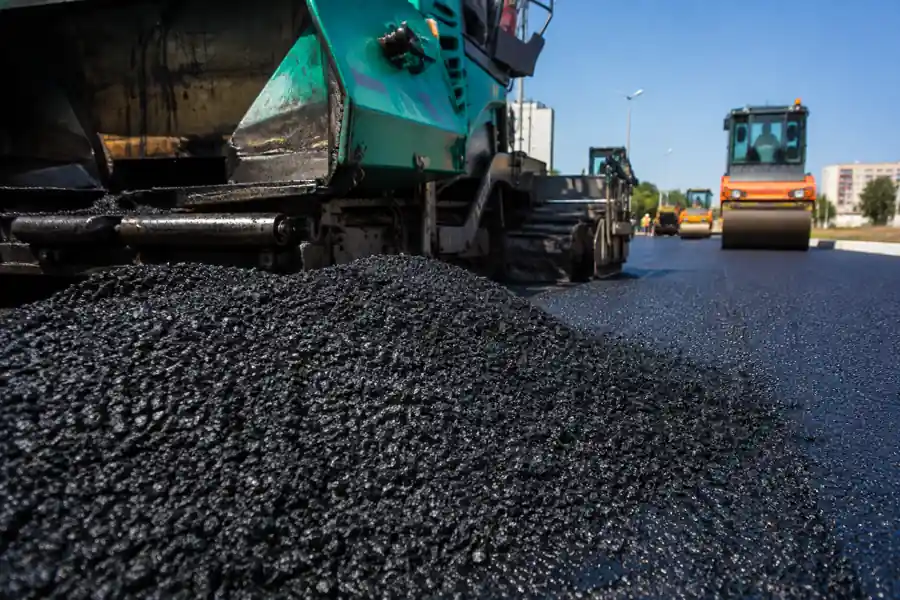
Low-Carbon Bitumen is becoming an important part of the transition toward more sustainable road construction. Governments, contractors, road authorities, and asphalt producers increasingly want to reduce the carbon footprint of infrastructure without sacrificing pavement quality, durability, or safety. As a result, the industry is looking beyond conventional production methods and exploring cleaner energy, recycled asphalt, lower-temperature processing, bio-based materials, and more efficient refining.
However, low-carbon bitumen does not refer to one universal grade or chemical formulation. Instead, the term generally describes bituminous binders or production pathways designed to achieve a lower greenhouse-gas footprint than an appropriate conventional baseline. The actual reduction depends on feedstock, refinery technology, energy sources, transportation, recycled content, system boundaries, and the method used to calculate emissions.
Therefore, choosing a sustainable asphalt binder requires more than looking for a green label. Buyers need to evaluate technical performance, carbon data, lifecycle assumptions, durability, supply reliability, and compliance with project specifications.
This guide examines how low-carbon bitumen works, how producers can reduce emissions, its relationship with RAP and warm mix asphalt, its potential applications, and its role in the future of sustainable road construction.
What Is Low-Carbon Bitumen?
Low-Carbon Bitumen is a broad term used for bituminous binders whose production, formulation, supply chain, or use can contribute to lower greenhouse-gas emissions compared with a defined conventional reference.
Importantly, low-carbon bitumen is not necessarily a separate penetration, viscosity, or Performance Grade. A binder still needs to meet the technical requirements of the intended pavement.
For example, producers may reduce the carbon intensity associated with bitumen through improved refinery efficiency, lower-carbon energy, renewable electricity, alternative feedstocks, recycled materials, optimized transportation, or other decarbonization technologies.
The carbon benefit also depends heavily on the assessment boundary. A manufacturer may report emissions associated only with production up to the refinery gate, while another assessment may include transportation, asphalt production, construction, maintenance, and end-of-life processes.
For this reason, buyers should evaluate both the technical specification and the environmental evidence behind a low-carbon asphalt binder.
Why Does the Bitumen Industry Need to Reduce Carbon Emissions?
Road networks support trade, transportation, industry, and economic development. At the same time, building and maintaining those networks consumes raw materials and energy.
Bitumen forms only part of an asphalt mixture by mass, but its petroleum origin and processing make its environmental footprint important when evaluating road construction.
Reducing emissions across the asphalt value chain can therefore support broader infrastructure decarbonization goals.
Carbon Emissions From Bitumen Production
Conventional bitumen originates primarily from petroleum refining. Carbon emissions associated with its supply can come from several stages, including crude extraction, transportation, refinery energy consumption, processing, storage, and delivery.
Consequently, two bitumen products with similar physical specifications may have different carbon footprints depending on their production routes and supply chains.
Refinery efficiency is especially important. More efficient heat management, lower-carbon fuels, renewable electricity, and optimized processing can reduce emissions associated with producing petroleum products.
Carbon Emissions From Asphalt Production
Bitumen production and asphalt production are not the same process.
Asphalt plants combine bituminous binder with aggregates and other materials. Traditional hot mix asphalt normally requires heating both aggregates and binder to achieve appropriate coating, mixing, transportation, and compaction.
This heating requires energy and produces emissions.
Therefore, a road project can pursue carbon reduction at several levels simultaneously. It may use a lower-carbon binder while also adopting warm mix technology, recycled asphalt, efficient equipment, renewable energy, and optimized transportation.
Infrastructure Decarbonization
Road authorities increasingly consider embodied carbon alongside cost and engineering performance.
This trend creates demand for better lifecycle information and more transparent environmental documentation. Instead of focusing only on the initial material cost, infrastructure owners can evaluate emissions associated with production, construction, maintenance, rehabilitation, and service life.
How Is Low-Carbon Bitumen Produced?
There is no single production method for Low-Carbon Bitumen. Instead, manufacturers and the wider asphalt industry can use several strategies to reduce the carbon intensity associated with road binders.
Improving Refinery Energy Efficiency
Refineries require significant energy to process crude oil and manufacture petroleum products. Improving heat recovery, process control, equipment efficiency, and energy management can reduce energy consumption.
Modern monitoring systems can also identify inefficient operations and help producers optimize energy use.
These improvements may reduce emissions without fundamentally changing the final binder grade.
Using Renewable and Lower-Carbon Energy
The source of energy used during production has a direct influence on associated emissions.
Where technically and economically practical, producers can integrate renewable electricity or lower-carbon energy sources into their operations. The resulting carbon benefit depends on the actual energy mix and how emissions are calculated.
This is one reason buyers should request documented carbon information rather than assuming that all products carrying sustainability claims have equivalent environmental performance.
Reducing Asphalt Production Temperatures
Lowering asphalt production temperatures can reduce fuel consumption at the asphalt plant.
Warm mix asphalt technologies allow producers to manufacture and compact asphalt at lower temperatures than traditional hot mix processes under suitable conditions.
However, warm mix asphalt should not automatically be called low-carbon bitumen. Warm mix asphalt is an asphalt production approach, while low-carbon bitumen refers to the binder or its associated carbon profile.
Combining the two can nevertheless support a broader low-carbon road strategy.
Using Recycled Asphalt
Reclaimed Asphalt Pavement (RAP) contains both aggregates and aged bituminous binder.
Reusing RAP can reduce demand for virgin aggregates and may reduce the amount of new binder required in an asphalt mixture. This supports a more circular approach to pavement construction.
However, increasing RAP content changes mixture behavior. Engineers must account for aged binder stiffness, blending, cracking resistance, workability, and overall pavement performance.
Rejuvenators or softer virgin binders may be used in certain formulations to restore desirable properties.
Incorporating Bio-Based Materials
Bio-based materials offer another potential route toward lower-carbon asphalt binders.
Researchers and manufacturers have investigated materials derived from biomass, waste oils, lignin, and other renewable or recovered sources as binder components, modifiers, or partial substitutes.
These materials can potentially reduce reliance on virgin petroleum-based resources. Nevertheless, environmental performance cannot be assumed simply because a material is bio-based.
Feedstock sourcing, processing energy, transportation, land-use effects, durability, and service life all influence the final lifecycle result.
Carbon Capture and Lower-Carbon Refining
Carbon capture technologies may eventually contribute to lower emissions from energy-intensive industrial processes.
Likewise, electrification, renewable energy, process optimization, hydrogen technologies, and improved refinery efficiency could reduce the carbon intensity associated with petroleum refining.
These technologies are at different levels of commercial maturity, so their practical impact varies between facilities and regions.

Low-Carbon Bitumen vs Conventional Bitumen
The main difference is not necessarily visible in the material itself. Two binders may meet similar engineering requirements while having different production histories and associated carbon footprints.
| Factor | Low-Carbon Bitumen | Conventional Bitumen |
|---|---|---|
| Main objective | Reduce associated carbon emissions while maintaining performance | Meet established binder performance requirements |
| Carbon intensity | Designed or produced to achieve a lower documented footprint | Depends on conventional production route |
| Feedstock | May include petroleum, recovered or alternative components | Primarily petroleum-derived |
| Energy | May use lower-carbon production strategies | Conventional refinery energy mix |
| Recycling | Often integrated into circular road strategies | Compatible with recycling depending on design |
| Technical performance | Must satisfy required specifications | Established specifications |
| Availability | Developing and region-dependent | Widely available |
| Environmental documentation | Increasingly important | Varies by supplier |
| Cost | Depends on technology and supply | Established market pricing |
The term low-carbon should therefore not replace engineering specifications.
Road designers still need to consider penetration grade (bitumen 60/70), viscosity, Performance Grade, softening point, aging behavior, cracking resistance, rutting resistance, and other relevant characteristics.
Carbon Footprint of Low-Carbon Bitumen
Understanding the carbon footprint of bitumen requires a defined methodology.
Carbon emissions are commonly expressed as carbon dioxide equivalent, or CO₂e, which allows different greenhouse gases to be represented using a common measure.
For bitumen, environmental assessments may report emissions per tonne of product. However, comparing two numbers without checking their underlying methodology can produce misleading conclusions.
How Is the Bitumen Carbon Footprint Calculated?
A lifecycle assessment can examine environmental impacts across different stages of a product’s life.
Depending on the selected system boundary, calculations may include:
- Raw-material extraction
- Feedstock transportation
- Refining
- Energy consumption
- Bitumen production and storage
- Transportation to the asphalt plant
- Asphalt manufacturing
- Road construction
- Maintenance and rehabilitation
- End-of-life processing and recycling
The chosen boundary should always accompany the reported carbon value.
Cradle-to-Gate vs Cradle-to-Grave
A cradle-to-gate assessment generally covers impacts from raw-material extraction until the product leaves the production facility.
A cradle-to-grave assessment extends much further and can include transportation, construction, use, maintenance, and end-of-life stages.
Neither boundary is automatically wrong. Problems arise when buyers compare figures calculated using different boundaries as though they represent the same thing.
Environmental Product Declarations
Environmental Product Declarations, commonly known as EPDs, provide standardized environmental information based on defined methodologies and product category rules.
EPDs can improve transparency when road authorities or procurement teams want to evaluate embodied carbon.
However, buyers still need to examine scope, declared unit, assumptions, geography, data quality, and lifecycle stages before comparing products.
What Affects the Carbon Intensity of Bitumen?
Several variables can influence the final result:
- Crude or alternative feedstock
- Refinery configuration
- Energy efficiency
- Electricity source
- Fuel consumption
- Production method
- Transportation distance
- Storage requirements
- Recycled material use
- Pavement durability
- Maintenance frequency
- End-of-life recycling
Therefore, there is no reliable universal percentage by which every Low-Carbon Bitumen product reduces emissions.
Low-Carbon Bitumen and Warm Mix Asphalt
Warm Mix Asphalt (WMA) is one of the most important technologies associated with lower-emission road construction.
Traditional hot mix asphalt requires substantial heating. Warm mix technologies can allow asphalt production and compaction at reduced temperatures.
Lower temperatures can offer several potential advantages, including reduced plant fuel consumption, lower production emissions, and improved working conditions around hot asphalt.
Depending on the technology and project, WMA may also improve workability or extend transportation and paving opportunities.
However, Low-Carbon Bitumen and Warm Mix Asphalt are not interchangeable terms.
A project can use conventional bitumen in a warm mix system, or it can combine a documented lower-carbon binder with WMA technology.
Combining multiple strategies may deliver greater overall carbon reductions than relying on one material change alone.
Low-Carbon Bitumen and Recycled Asphalt Pavement
Reclaimed Asphalt Pavement has become central to the circular economy in road construction.
When contractors remove or mill an existing asphalt pavement, the recovered material still contains valuable aggregate and aged binder. Instead of treating the material entirely as waste, asphalt producers can process and incorporate it into new mixtures.
This can reduce demand for virgin aggregate and virgin binder.
From a carbon perspective, RAP may also reduce emissions associated with extracting, processing, and transporting new raw materials.
However, high RAP content creates technical challenges.
Aged bitumen generally becomes harder and stiffer over time. Therefore, engineers need to balance recycled content with cracking resistance, workability, durability, and other performance requirements.
A successful low-carbon pavement strategy must optimize both recycled content and pavement life.
Using more recycled material offers limited environmental benefit if the resulting pavement fails prematurely and requires frequent reconstruction.
Bio-Bitumen and Low-Carbon Asphalt Binders
Bio-bitumen has gained considerable attention as researchers explore alternatives to conventional petroleum-derived binders.
Bio-based components may come from biomass, lignin, waste oils, forestry products, agricultural residues, or other renewable and recovered resources.
Some materials can partially replace petroleum-based binder. Others act as modifiers or rejuvenators.
Is Bio-Bitumen the Same as Low-Carbon Bitumen?
No.
Bio-bitumen describes a binder or binder component derived partly or substantially from biological resources. Low-carbon bitumen describes a carbon-performance objective.
A bio-based product may have a lower carbon footprint, but that needs to be demonstrated through appropriate lifecycle analysis.
Likewise, petroleum-derived bitumen could potentially achieve a reduced carbon footprint through cleaner refinery energy, greater process efficiency, optimized logistics, or other decarbonization measures.
Can Bio-Bitumen Replace Petroleum Bitumen?
Potentially, in certain applications and formulations, but large-scale replacement involves significant technical and commercial challenges.
Engineers must examine aging, adhesion, moisture resistance, temperature susceptibility, rutting, cracking, storage stability, compatibility, and long-term durability.
Availability and consistent feedstock quality are also important.
Consequently, partial substitution and modification may become more practical in many markets before complete replacement of conventional bitumen.
Benefits of Low-Carbon Bitumen
The primary objective is to reduce greenhouse-gas emissions associated with pavement materials without compromising required road performance.
Potential benefits include:
- Lower embodied carbon
- Reduced reliance on virgin resources
- Better integration with recycled asphalt
- Support for circular-economy strategies
- Compatibility with broader road decarbonization programs
- Support for environmentally focused procurement
- Potential reductions in lifecycle environmental impact
- Greater transparency through carbon reporting
- Support for infrastructure sustainability targets
However, these benefits depend on the actual product and project.
A sustainability claim should always be supported by appropriate data.
Challenges and Limitations of Low-Carbon Bitumen
Despite its potential, low-carbon road construction faces several practical challenges.
Cost
New technologies, alternative materials, environmental verification, specialized processing, and limited production volumes may increase initial costs.
Nevertheless, initial material price tells only part of the story. Lifecycle cost can become more relevant when a pavement offers longer service life or requires less maintenance.
Availability
Conventional bitumen has a mature global supply chain. Lower-carbon alternatives and documented low-carbon production routes are not yet equally available in every country.
Large infrastructure projects also require reliable volumes and consistent quality.
No Single Universal Definition
One of the biggest challenges is the lack of a single global definition covering every product marketed as low-carbon or sustainable bitumen.
Different producers may use different technologies and carbon accounting methods.
Therefore, procurement teams should request measurable environmental information rather than relying solely on marketing terminology.
Performance Verification
Environmental performance cannot replace engineering performance.
Every binder still needs to satisfy the technical requirements of its intended application.
Testing may include penetration, softening point, viscosity, aging characteristics, rheological properties, rutting resistance, fatigue performance, and low-temperature behavior depending on the grading system and project.
Supply Chain Transparency
A credible carbon calculation requires reliable data.
Feedstock origin, electricity mix, refinery energy, transportation, recycled content, and other variables can materially change the result.
Better supply-chain transparency will therefore play an increasingly important role in low-carbon procurement.
Low-Carbon Bitumen Applications
Low-Carbon Bitumen may potentially support many conventional pavement applications when the binder meets the necessary project specification.
Possible applications include:
- Highway construction
- Urban roads
- Airport pavements
- Industrial roads
- Heavy-duty pavements
- Parking areas
- Road rehabilitation
- Sustainable infrastructure projects
- Asphalt overlays
- Municipal road networks
The environmental label alone does not determine suitability.
Engineers should first select the necessary pavement performance and binder specification, then evaluate lower-carbon options capable of satisfying those requirements.
Low-Carbon Bitumen for Highway Construction
Highways create a particularly strong case for lifecycle thinking because they handle large traffic volumes and often remain in service for decades.
Heavy traffic, high pavement temperatures, repeated loading, oxidation, water, and seasonal temperature changes can damage asphalt.
Therefore, durability remains essential.
A lower-carbon binder that significantly reduces pavement life could ultimately increase lifecycle emissions because the road would require additional maintenance, materials, transportation, and construction.
For this reason, sustainable highway design needs to consider carbon emissions and engineering performance together.
In hot regions or heavily trafficked roads, engineers may specify harder viscosity grades, suitable Performance Grade binders, or polymer-modified systems depending on the pavement design.
In colder environments, low-temperature cracking becomes a major concern.
The correct binder must therefore match local climate and traffic conditions.
Does Low-Carbon Bitumen Perform Like Conventional Bitumen?
It can, but the answer depends on the specific binder.
“Low-carbon” describes environmental performance or a production strategy. It does not automatically describe mechanical properties.
Engineers should evaluate characteristics such as:
- Penetration
- Viscosity
- Softening point
- Elastic response
- Rutting resistance
- Fatigue resistance
- Low-temperature cracking
- Short-term aging
- Long-term aging
- Moisture sensitivity
- Adhesion
A lower-carbon product should demonstrate that it can meet the technical specification required for its intended pavement.
This principle is critical because longer pavement life itself can support lower lifecycle emissions.
Low-Carbon Bitumen Standards and Specifications
There is no single worldwide specification that defines every product called Low-Carbon Bitumen.
Instead, the binder generally needs to comply with the established specification relevant to its market and application.
Depending on the region and binder type, projects may refer to standards and grading systems developed by organizations such as ASTM, AASHTO, or European standards bodies.
For example, conventional paving bitumen may be evaluated through penetration-based specifications, while other markets use viscosity grades or Performance Grade systems.
Environmental documentation represents a separate layer.
A supplier might demonstrate that a binder meets the necessary technical specification while also providing lifecycle or environmental information to document its carbon performance.
Buyers should therefore ask two different questions:
Does the bitumen meet the engineering specification?
and:
Can the supplier demonstrate the claimed carbon reduction using a credible methodology?
Both matter.
How to Choose a Low-Carbon Bitumen Supplier
Procurement teams should evaluate more than price when selecting a supplier for sustainable infrastructure projects.
First, check the technical specification and confirm that the proposed binder matches the road design.
Next, request supporting environmental information. Depending on the product and market, this may include lifecycle data, verified carbon calculations, EPDs, or information about the production route.
Buyers should also consider batch consistency, testing procedures, production capacity, packaging, bulk-loading options, export experience, documentation, and logistics.
For international projects, transportation can become a meaningful part of the supply chain footprint. Therefore, efficient logistics and suitable shipping methods may contribute to overall project performance.
A credible supplier should avoid unsupported claims such as “zero carbon” or “100% green” unless those statements can be demonstrated through transparent and appropriate evidence.
Is Low-Carbon Bitumen More Expensive?
Not necessarily, although some lower-carbon technologies can carry an initial premium.
The final price depends on many factors, including:
- Bitumen grade
- Production technology
- Feedstock
- Energy costs
- Alternative or recycled components
- Certification and environmental documentation
- Production location
- Order volume
- Packaging
- Storage
- Transportation
- Freight rates
- International petroleum markets
Buyers should also consider lifecycle economics.
Suppose one pavement solution costs slightly more initially but provides longer service life, incorporates more recycled material, or requires less energy during production. In that case, the total project economics may differ considerably from a simple comparison of bitumen prices per tonne.
The Future of Low-Carbon Bitumen
The future of sustainable roads will probably not depend on one revolutionary binder.
Instead, the industry is likely to combine several technologies.
Greater use of RAP can reduce demand for virgin materials. Warm mix technologies can lower asphalt production temperatures. Bio-based components may partially replace petroleum-derived materials. More efficient refineries and lower-carbon energy can reduce production emissions.
At the same time, better lifecycle assessment will help road authorities understand where emissions actually occur.
Environmental Product Declarations and other transparent reporting methods may also become increasingly important in infrastructure procurement.
Performance-based pavement design will remain essential. Contractors cannot pursue lower emissions at the expense of road durability.
Digital technologies may further support this transition. Advanced monitoring, data analysis, machine learning, and AI-assisted asphalt mix design can potentially help engineers optimize recycled content, binder selection, energy consumption, and pavement performance.
Therefore, the future is better described as a low-carbon asphalt system rather than simply a low-carbon product.
The most effective road may combine a lower-carbon binder, recycled materials, optimized mixture design, efficient production temperatures, shorter transportation routes, durable pavement engineering, and effective end-of-life recycling.
Frequently Asked Questions About Low-Carbon Bitumen
What is Low-Carbon Bitumen?
Low-Carbon Bitumen generally refers to bituminous binder produced, formulated, or supplied through methods intended to reduce associated greenhouse-gas emissions compared with an appropriate conventional baseline. The term does not define one universal bitumen grade, so buyers should evaluate both technical specifications and environmental documentation.
How Does Low-Carbon Bitumen Reduce CO₂ Emissions?
Carbon reductions can come from several sources, including improved refinery efficiency, lower-carbon energy, renewable electricity, alternative feedstocks, optimized transportation, recycling, and other production technologies. Actual reductions vary according to the product and the lifecycle boundary used for the calculation.
Is Low-Carbon Bitumen the Same as Bio-Bitumen?
No. Bio-bitumen contains material derived from biological or renewable resources, while low-carbon bitumen describes an environmental objective. Bio-based components can contribute to a lower-carbon binder, but their actual carbon benefit should be assessed using appropriate lifecycle data.
Can Low-Carbon Bitumen Be Used With Recycled Asphalt?
Yes, provided the complete asphalt mixture meets the required performance specification. Combining lower-carbon binder strategies with RAP can potentially reduce virgin material demand and support circular road construction. Engineers must still account for aged binder properties and mixture durability.
Is Low-Carbon Bitumen Suitable for Highways?
It can be suitable when it meets the engineering requirements for the highway. Traffic loading, temperature, pavement structure, rutting resistance, fatigue, cracking, and aging performance remain important regardless of the binder’s environmental profile.
Does Low-Carbon Bitumen Perform Like Conventional Bitumen?
Performance depends on the formulation and specification rather than the low-carbon label. A lower-carbon binder can be designed to meet established requirements, but engineers should verify relevant physical and rheological properties before use.
How Is the Carbon Footprint of Bitumen Calculated?
Lifecycle assessment can measure greenhouse-gas emissions associated with raw materials, refining, energy, transportation, asphalt production, construction, maintenance, and end-of-life activities. Results are usually expressed as CO₂ equivalent, but the calculation boundary must be clearly defined when comparing products.
Is Low-Carbon Bitumen More Expensive Than Conventional Bitumen?
Pricing varies according to grade, technology, production location, environmental documentation, order volume, packaging, transportation, and market conditions. Some technologies may carry an initial premium, so buyers should compare both upfront cost and long-term pavement performance.
Conclusion: Low-Carbon Bitumen and Sustainable Roads
Low-Carbon Bitumen represents an important direction for an industry facing growing pressure to reduce infrastructure emissions while maintaining safe and durable road networks.
However, sustainable road construction requires more than replacing one binder with another. Refinery efficiency, renewable energy, recycled asphalt, warm mix technologies, bio-based materials, transportation, pavement durability, maintenance, and end-of-life recycling can all influence the final carbon footprint.
For road authorities, contractors, asphalt producers, and procurement managers, the strongest approach is to combine measurable environmental performance with established engineering requirements.
As carbon reporting improves and road technologies continue to develop, low-carbon bitumen can become one component of a broader transition toward more efficient, circular, durable, and sustainable road construction.