
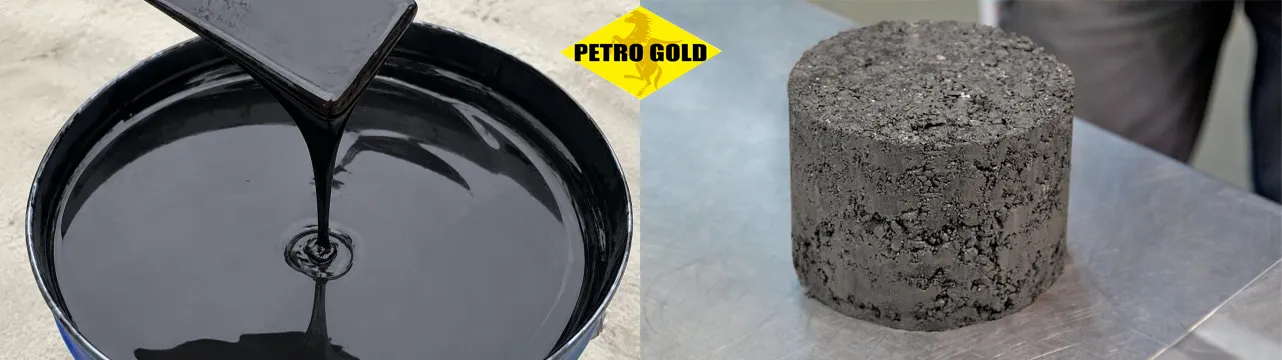
Choosing between Foamed Bitumen vs Bitumen Emulsion can significantly affect pavement construction cost, moisture resistance, curing time, equipment requirements, and long-term road performance. Both technologies allow contractors to reduce the need for conventional hot-mix production, yet they behave very differently during mixing, placement, compaction, and curing.
The right option depends on aggregate condition, road design, climate, available machinery, construction schedule, and project budget. Therefore, engineers should compare the two systems based on practical performance rather than selecting a binder only by initial material cost.
This guide compares Foamed Bitumen vs Bitumen Emulsion across production, mixing behavior, curing, strength development, moisture sensitivity, recycling applications, environmental performance, and overall project suitability.
Foamed Bitumen vs Bitumen Emulsion at a Glance
| Property | Foamed Bitumen | Bitumen Emulsion |
|---|---|---|
| Binder Condition | Temporarily expanded hot bitumen | Bitumen dispersed in water |
| Main Activation | Small amount of injected water | Water-based emulsifying system |
| Heating Requirement | Bitumen must be heated | Generally lower processing temperature |
| Curing Dependence | Relatively limited | Strongly dependent on water evaporation |
| Early Strength | Usually develops quickly | May require more curing time |
| Aggregate Compatibility | Works well with suitable fine particles | Can suit a broad range of aggregates |
| Moisture Sensitivity | Requires good moisture control | Designed to work in moist environments |
| Recycling Use | Very common in cold recycling | Very common in cold recycling |
| Storage | Standard hot bitumen storage | Emulsion requires controlled storage |
| Transport | Similar to conventional bitumen | Easier at lower temperatures |
| Main Road Application | Stabilized base and recycled layers | Surface treatments, cold mixes and recycling |
Mixing Performance: Foamed Bitumen vs Bitumen Emulsion
Mixing behavior creates one of the biggest differences when comparing Foamed Bitumen vs Bitumen Emulsion.
Foamed bitumen expands dramatically when a very small quantity of water comes into contact with heated bitumen. The temporary expansion increases the binder’s surface area and allows it to disperse through mineral material.
However, foamed bitumen does not normally coat every aggregate particle in the same way as conventional hot mix asphalt. Instead, it tends to bind fine particles and create a bituminous mortar that connects larger aggregate particles.
This behavior can provide strong structural performance while maintaining some flexibility within the treated layer.
Bitumen emulsion behaves differently. Because the bitumen exists as small droplets dispersed within water, the binder can spread through aggregate at relatively low temperatures.
After mixing and placement, the emulsion must break. The water then separates or evaporates while the bitumen particles join together and form a continuous binder film.
Therefore, emulsion performance depends strongly on the interaction between the emulsion chemistry and aggregate surface.
Binder Grade Selection
The base bitumen grade can influence the final performance of both technologies.
For foamed bitumen applications, conventional penetration grades such as Bitumen 60/70 are commonly considered because they provide a useful balance between stiffness and workability.
The selected grade must also foam effectively at the chosen processing temperature. Expansion ratio and foam half-life become important production parameters because they affect how efficiently the binder disperses through the aggregate.
In some markets, contractors may also select other paving grades depending on climate, material availability, and pavement design.
Therefore, binder selection should always match the structural requirements of the recycled or stabilized layer.
Curing Time: Foamed Bitumen vs Bitumen Emulsion
Curing represents an important difference in the Foamed Bitumen vs Bitumen Emulsion comparison.
Foamed bitumen-treated material can often develop useful mechanical strength relatively quickly because only a small amount of water is introduced during the foaming process.
The aggregate may already contain moisture for compaction, but the binder itself does not introduce the same quantity of water found in an emulsion system.
As a result, projects using foamed bitumen may sometimes progress faster toward final compaction and subsequent pavement construction.
Bitumen emulsion requires more attention to curing.
Because water acts as the continuous phase of the emulsion, sufficient water must leave the mixture before the binder can achieve its intended performance.
Curing speed depends on:
ambient temperature
humidity
wind
layer thickness
aggregate absorption
emulsion formulation
initial moisture content
Therefore, cool or humid weather can extend curing periods.
Performance with Bitumen 80/100
Softer penetration grades such as Bitumen 80/100 can be suitable in applications where greater flexibility is required.
When used as a base binder for certain stabilization systems, a softer grade may improve flexibility under moderate pavement temperatures.
However, binder hardness should not be considered separately from pavement structure.
Traffic load, aggregate stiffness, environmental temperature, recycled asphalt content, and stabilizing additives can all influence final performance.
For this reason, laboratory mix design remains essential before full-scale construction.
Strength Development
Foamed bitumen-treated materials often behave differently from fully bound asphalt.
Instead of creating a completely coated aggregate structure, the foamed binder concentrates around fine particles and creates localized bonding.
This results in a material that may retain characteristics of both granular pavement layers and bituminous materials.
Consequently, foamed bitumen stabilization can offer:
improved tensile strength
increased resistance to permanent deformation
improved load distribution
retained flexibility
reduced moisture susceptibility when properly designed
Bitumen emulsion mixtures also develop strong pavement properties after curing.
However, their early strength can remain relatively low until sufficient water has escaped and the emulsion has completely broken.
Therefore, traffic opening schedules must consider the expected curing process.
Moisture Conditions
Aggregate moisture plays an important role in both systems.
Foamed bitumen actually requires some moisture within the aggregate mixture to support proper dispersion and compaction. However, excessive moisture can reduce density and delay strength development.
Therefore, contractors need to determine the optimum mixing moisture during laboratory testing.
Bitumen emulsion generally handles damp aggregate well because the binder already exists within a water-based system.
This characteristic can make emulsions especially practical for cold mixing and maintenance operations where completely dry aggregate is difficult to obtain.
However, excessive water can still slow curing.
Therefore, moisture management remains necessary.
Application in Cold Recycling
Cold recycling represents one of the strongest areas of comparison between Foamed Bitumen vs Bitumen Emulsion.
Both systems allow contractors to reuse reclaimed pavement materials without heating the entire aggregate mixture to conventional hot-mix temperatures.
Foamed bitumen is commonly used for:
cold in-place recycling
full-depth reclamation
stabilized base construction
recycled asphalt pavement
rehabilitation of deteriorated pavement layers
Bitumen emulsion is also widely used in:
cold in-place recycling
cold central plant recycling
maintenance mixes
base stabilization
surface rehabilitation
The final choice often depends on project equipment, aggregate grading, climate, curing conditions, and local binder availability.
Using Bitumen VG30 in Stabilization Projects
Viscosity-graded binders such as Bitumen VG30 may also be evaluated as base binders depending on regional paving specifications.
VG30 provides a relatively strong balance between stiffness and handling characteristics, which makes it widely used in conventional paving applications.
When engineers consider such a grade for foaming or modified stabilization processes, they should first test its expansion ratio, foam stability, and compatibility with the recycled aggregate.
Material testing remains important because different refinery sources can produce different foaming characteristics even within the same commercial grade.
Equipment Requirements
Equipment represents another major difference.
Foamed bitumen requires specialized equipment capable of accurately combining heated bitumen with a controlled quantity of water.
Modern recycling machines can inject the foamed binder directly into the mixing chamber while reclaiming existing pavement material.
The process requires precise control of:
bitumen temperature
water injection rate
binder dosage
mixing speed
material moisture
Bitumen emulsion systems generally do not require a foaming chamber.
Instead, the emulsion can be delivered directly to the recycling or mixing equipment.
This can simplify some projects, especially where emulsion supply infrastructure already exists.
However, emulsion quality and storage conditions require careful control to prevent premature breaking or separation.
Temperature Requirements
Foamed bitumen requires the base bitumen to reach a relatively high temperature before water injection.
Only the binder is heated, while the aggregate can remain at ambient temperature.
Therefore, the process still uses substantially less aggregate heating than conventional hot-mix asphalt production.
Bitumen emulsion can usually be handled at considerably lower temperatures.
This reduces fuel demand and can simplify construction in areas where large asphalt heating systems are unavailable.
Consequently, both systems support lower-temperature pavement construction, although their thermal requirements differ.
Environmental Impact
Both technologies can support more sustainable road construction.
The largest environmental advantage comes from reducing aggregate heating and increasing the use of reclaimed pavement materials.
Foamed bitumen recycling can reduce:
virgin aggregate demand
transportation of removed pavement
asphalt plant energy consumption
construction waste
hauling requirements
Bitumen emulsion provides many of the same advantages.
Furthermore, its relatively low application temperature can reduce fuel consumption during binder handling.
However, the total environmental impact depends on transportation distance, binder dosage, equipment efficiency, recycled material percentage, and project logistics.
Performance in Heavy Traffic Roads
For structural pavement rehabilitation, foamed bitumen often receives strong consideration because it can produce a highly effective stabilized base layer.
Its semi-bound behavior can help distribute wheel loads while maintaining enough flexibility to resist certain types of cracking.
Emulsion-treated layers can also provide strong structural performance when properly designed.
However, engineers must allow adequate curing before exposing the pavement to demanding traffic conditions.
Traffic volume, axle loading, pavement thickness, drainage, and subgrade strength should therefore influence binder selection.
Bitumen 40/50 for Higher Stiffness Requirements
Projects requiring a harder binder may evaluate grades such as Bitumen 40/50.
A harder base binder can potentially increase stiffness at higher service temperatures.
However, excessive stiffness can negatively affect flexibility and cracking resistance, particularly in colder climates.
Therefore, engineers should not automatically choose a harder grade for heavy traffic.
Instead, laboratory testing should determine whether the selected binder delivers the required balance of:
stiffness
tensile strength
moisture resistance
flexibility
fatigue performance
Construction Speed
Construction schedules can strongly influence the selection between Foamed Bitumen vs Bitumen Emulsion.
Foamed bitumen can offer an advantage when rapid strength development is important.
Because the system introduces relatively little additional water, treated material can sometimes reach acceptable performance sooner.
Bitumen emulsion projects may require a longer curing period before the next pavement layer is installed.
Nevertheless, emulsion curing can be relatively quick in warm, dry weather.
Therefore, local climate and project scheduling should be considered together.
Storage and Transportation
Standard paving bitumen used for foaming requires heated storage and transportation.
The binder must remain within the correct temperature range before entering the foaming system.
Emulsions normally require less heating during storage and transportation.
However, they remain sensitive to freezing, prolonged storage, contamination, and excessive heating.
Therefore, storage tanks and handling procedures must match the characteristics of the selected emulsion.
Aggregate Compatibility
Foamed bitumen performance depends heavily on aggregate grading.
A sufficient quantity of fine particles is typically required because the foamed binder interacts mainly with the finer fraction of the mixture.
If the material lacks fines, engineers may need to adjust the aggregate grading or introduce additional filler.
Bitumen emulsion compatibility depends more strongly on surface chemistry.
Aggregate charge, mineral composition, dust content, and emulsion type can influence breaking behavior and adhesion.
For this reason, compatibility testing is an essential part of emulsion mix design.
Cost Comparison: Foamed Bitumen vs Bitumen Emulsion
There is no universal cost winner in the Foamed Bitumen vs Bitumen Emulsion comparison.
Foamed bitumen may require more specialized production machinery. However, projects can benefit from rapid processing, reduced curing requirements, and efficient in-place recycling.
Bitumen emulsion may require simpler binder application equipment, although the emulsion itself includes additional production steps and emulsifying agents.
Total project cost should include:
binder cost
equipment rental
transport
aggregate requirements
construction speed
curing delays
labor
pavement life
maintenance requirements
Therefore, lifecycle cost often provides a better comparison than binder price alone.
Weather Sensitivity
Weather can affect both systems, although emulsions are generally more sensitive during curing.
High humidity or low temperature can slow water evaporation and extend the curing process.
Rain shortly after construction may also interfere with early strength development.
Foamed bitumen can sometimes provide greater flexibility in marginal weather because it does not depend on emulsion breaking.
However, excessive aggregate moisture can still create construction problems.
Proper weather planning remains important for both technologies.
Foamed Bitumen vs Bitumen Emulsion for Recycling
For recycling projects, both technologies offer significant advantages.
Foamed bitumen can be especially attractive for deep pavement rehabilitation where reclaimed asphalt and granular base materials are treated together.
Bitumen emulsion can work particularly well where aggregate moisture, lower-temperature binder handling, or specific chemical adhesion characteristics are important.
Therefore, the decision should depend on actual site conditions rather than using one technology for every pavement.
GoldBitumen supplies paving bitumen for road construction, asphalt production, stabilization, and recycling applications in international markets.
Main Advantages of Foamed Bitumen
Foamed bitumen offers several practical benefits.
It can provide rapid strength development, strong structural stabilization, effective use of reclaimed asphalt, reduced aggregate heating, and high recycling efficiency.
Moreover, it can maintain useful flexibility within stabilized pavement layers.
Its main limitations include the requirement for specialized foaming equipment and careful control of aggregate grading and moisture.
Main Advantages of Bitumen Emulsion
Bitumen emulsion also provides important construction advantages.
It works at low application temperatures, mixes well with damp aggregate, supports several cold paving techniques, and can be used for both structural rehabilitation and pavement maintenance.
However, curing conditions require greater attention because water must leave the system before full binder strength develops.
Foamed Bitumen vs Bitumen Emulsion: Which One Fits the Project?
The choice between Foamed Bitumen vs Bitumen Emulsion depends on pavement design and construction conditions.
Foamed bitumen is often particularly suitable when contractors need structural base stabilization, rapid recycling, high reclaimed material content, and relatively fast strength development.
Bitumen emulsion can be highly practical when low-temperature processing, damp aggregate compatibility, surface treatment capability, and flexible cold-mix production are priorities.
Neither system should be selected only according to binder price.
Instead, engineers should evaluate aggregate characteristics, climate, equipment availability, traffic loading, pavement structure, curing requirements, binder grade, and project schedule.
Conclusion: Foamed Bitumen vs Bitumen Emulsion
The Foamed Bitumen vs Bitumen Emulsion comparison shows that both technologies can support efficient, lower-temperature and highly recyclable pavement construction.
Foamed bitumen offers fast binder dispersion, strong stabilized layers, and reduced dependence on prolonged curing. Bitumen emulsion provides excellent low-temperature handling, good compatibility with moist aggregate, and broad application possibilities.
Ultimately, the most suitable technology depends on road structure, reclaimed material properties, environmental conditions, available equipment, and construction objectives.
By combining laboratory mix design with the correct binder grade and proper field control, both foamed bitumen and bitumen emulsion can deliver durable, cost-effective pavement performance.