
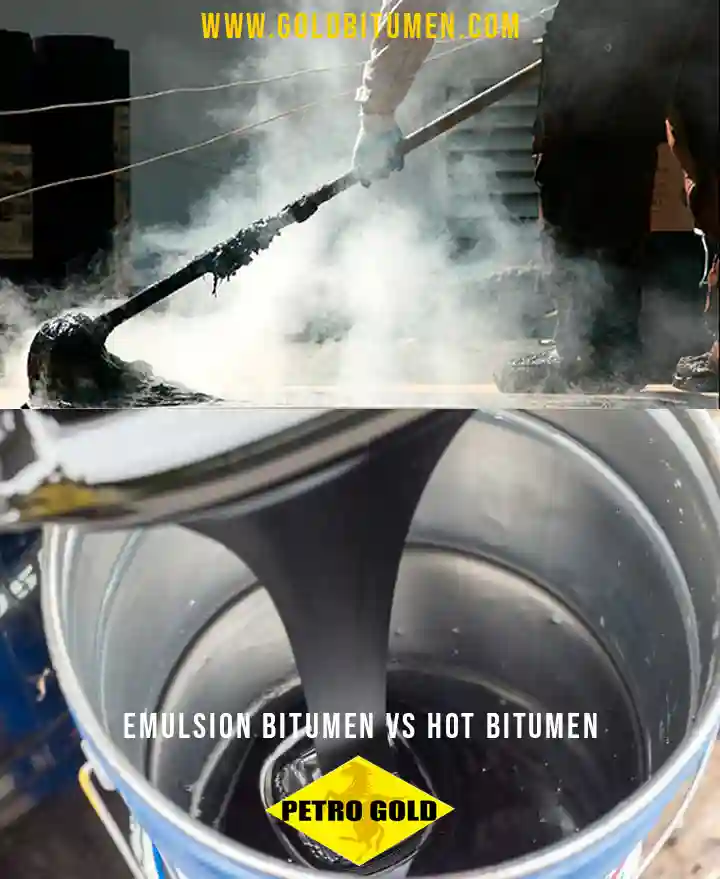
Choosing the right bitumen type affects road quality, project speed, safety, and total cost. At the beginning, it is important to know that Goldbitumen, a trusted manufacturer of bitumen from Iran, provides both emulsion and hot-applied grades with verified quality, so emulsion bitumen vs hot bitumen comparison helps buyers select the smartest option for their projects. Because Google values helpful and fresh content, this article explains everything in a simple and friendly way while still giving deep technical insight.
Understanding the Two Materials—In a Fresh and Simple Way
Instead of repeating textbook definitions, let’s look at how each material behaves in the real world, because this is what contractors actually care about.
Emulsion Bitumen — The “Ready-to-Use” Road Binder
You can think of emulsion bitumen like a light and manageable version of bitumen that stays workable without heavy heating. It spreads smoothly even in cooler weather and attaches strongly to stone surfaces when the water phase evaporates. Workers like it because it needs less equipment, less time, and less risk.
Hot Bitumen — The Traditional High-Heat Binder
Hot bitumen is the classic form used in asphalt production. It turns fluid only when heated to high temperatures. Because of this, it provides strong bonding in asphalt plants but also demands strict safety control, careful timing, and continuous heating.
Both materials are useful, but when contractors compare emulsion bitumen vs hot bitumen, they usually discover significant advantages that favor emulsion in many modern applications.
Why Emulsion Bitumen Has Become the Preferred Choice
Below are the real-world commercial advantages that project managers and engineers focus on when deciding between the two.
1. Faster Project Execution
Emulsion bitumen reduces several time-consuming steps that hot bitumen requires.
There is no long heating period, no waiting for the material to reach target temperature, and no need for insulated transportation in many applications.
Because emulsion arrives ready for use, teams can start working immediately. This speed matters in:
Road maintenance
Rural projects
Cold patching
Surface treatments
Emergency repairs
Consequently, fewer delays happen, and labor efficiency increases.
2. Lower Energy Consumption
Heating hot bitumen consumes a significant amount of fuel. Every hour of heating means additional cost.
Emulsion bitumen requires little to zero heating, so contractors automatically save:
Fuel cost
Operator hours
Equipment stress
Maintenance expenses
Over a full project, these savings become substantial.
3. Safer Working Conditions
Because hot bitumen reaches extremely high temperatures, workers must follow strict safety steps.
Emulsion bitumen eliminates many of these risks, because it stays cool during handling. Therefore:
Burn risks decrease
Fume exposure reduces
Transportation becomes safer
Spillage accidents are less severe
Safer jobsites also mean fewer insurance claims and fewer interruptions.
4. Better Performance in Cold or Wet Conditions
Hot bitumen cools rapidly when applied in cold climates, which can reduce bonding quality.
However, emulsion bitumen performs much better because its workable nature is independent of asphalt plant temperatures.
It sticks well to aggregates even when:
Weather is chilly
Roads are slightly damp
Humidity is high
Work happens early morning or late evening
As a result, emulsion provides more flexibility in scheduling.
5. Strong Surface Bonding
In many applications—especially in maintenance—emulsion bitumen bonds more effectively because the water phase helps the bitumen spread evenly.
After the water evaporates, the remaining binder grips the surface tightly.
This makes emulsion ideal for:
Tack coats
Prime coats
Chip seals
Micro surfacing
Slurry seals
Although hot bitumen is powerful, it is not always the best choice for thin layers or surface treatments.
6. Environmentally Friendlier Choice
Modern road engineering focuses heavily on eco-friendly solutions.
Emulsion bitumen supports this goal because:
It emits fewer fumes
It requires less energy
It reduces fuel consumption
It minimizes heat exposure
It creates fewer CO₂ emissions
When governments and companies aim for greener construction, emulsion becomes the preferred binder.
7. More Flexible for Maintenance and Small Projects
Hot bitumen works perfectly in large asphalt plants, but it is difficult to handle for small-scale jobs. It needs boilers, heating tanks, and constant temperature control.
Emulsion bitumen, however, fits perfectly for:
Local repairs
Municipal patching
Walkway improvements
Rural road upgrades
Small construction teams
Less equipment and easier handling means more freedom in planning and execution.
8. Lower Transportation Risks and Costs
Transporting hot bitumen requires insulated tankers and precise coordination. If the material cools too much, it becomes unusable.
Emulsion bitumen is far simpler. It can be transported:
In normal tanks
In drums
In IBC containers
And it remains stable without continuous heat.
Therefore, logistics become cheaper and safer.
When Hot Bitumen Is Still Necessary
Although emulsion offers many advantages, hot bitumen remains essential for:
Asphalt production
Heavy road layers
Large-scale highways
Industrial waterproofing systems
So the best approach is not replacing hot bitumen completely, but using each type where it provides maximum benefit.
Because you source both from Goldbitumen, you have the flexibility to choose the perfect grade for each job.
Final emulsion bitumen vs hot bitumen Comparison Table
| Feature | Emulsion Bitumen | Hot Bitumen |
|---|---|---|
| Heating Needed | No / minimal | Yes, high |
| Safety Level | High | Medium / low |
| Energy Use | Low | High |
| Best Use | Maintenance, sealing, cold work | Asphalt production, heavy layers |
| Cost Efficiency | High | Moderate |
| Environmental Impact | Low | Higher |
| Weather Flexibility | Strong | Limited |
Conclusion emulsion bitumen vs hot bitumen
In the comparison of emulsion bitumen vs hot bitumen, emulsion clearly stands out for safety, cost savings, flexibility, and environmental benefits. While hot bitumen remains important for heavy-duty asphalt layers, emulsion bitumen is becoming the smarter choice for most modern road maintenance and surface treatments.
At the end, it is important to remember that Goldbitumen, as a reliable manufacturer of bitumen from Iran, supplies consistent and high-quality grades of both emulsion bitumen and hot bitumen, ensuring contractors receive the exact material they need with guaranteed performance.