
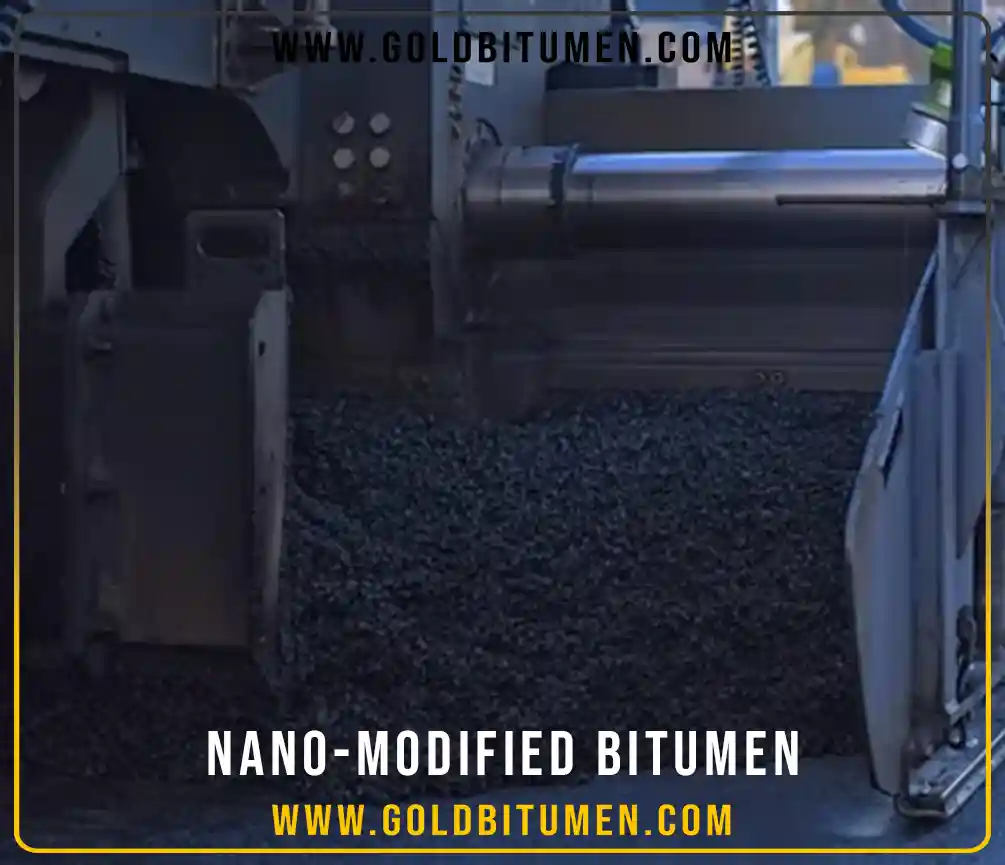
Nano-Modified Bitumen is a performance-enhanced asphalt binder produced by dispersing nano-scale materials into conventional bitumen to improve strength, durability, and resistance to aging. It matters because roads today face heavier traffic loads, extreme temperature cycles, and tighter maintenance budgets. Engineers, contractors, and procurement teams use this material when standard or polymer-modified grades no longer deliver enough rutting resistance, crack control, or service life.
Unlike marketing claims, the real value of Nano-Modified Bitumen shows on the road. When designed and handled correctly, it extends pavement life, reduces deformation, and improves long-term cost efficiency.
What Makes Nano-Modified Bitumen Different from Conventional Grades?
Conventional penetration or performance grade bitumen relies on its natural hydrocarbon structure. Polymer-modified binders improve elasticity, yet they still face limits under severe heat, heavy axle loads, or oxidative aging.
Nano-Modified Bitumen changes the internal structure at a microscopic level. Nano-particles distribute evenly through the binder and interact directly with asphaltenes and maltenes. This interaction strengthens the binder matrix instead of just thickening it.
In some projects, engineers compare nano-modified binders against conventional grades such as bitumen 60/70 to clearly measure improvements in rutting resistance, aging behavior, and long-term durability.
In practice, this leads to better performance without excessive viscosity increase.
Common Nano Materials Used in Bitumen Modification
Several nano materials serve industrial bitumen applications. Each type targets a specific performance issue.
Nano-Silica (SiO₂)
Nano-silica improves stiffness at high temperatures and slows oxidative aging. It also enhances adhesion between bitumen and aggregates.
Nano-Clay
Nano-clays improve moisture resistance and reduce stripping. They also enhance thermal stability during hot mix production.
Carbon Nanotubes (CNTs)
CNTs significantly increase tensile strength and fatigue resistance. Engineers use them in high-stress pavements, bridges, and heavy-duty industrial roads.
Nano-Calcium Carbonate
This option offers cost-effective reinforcement and improves stiffness while maintaining workable viscosity.
Each nano additive requires precise dosage. Overuse reduces workability and complicates mixing.
How Nano-Modified Bitumen Improves Pavement Performance
Higher Rutting Resistance
Nano reinforcement limits permanent deformation under heavy loads. Roads maintain shape even in high-temperature climates.
Improved Fatigue Life
Micro-crack propagation slows down. Pavements resist repeated stress cycles for longer periods.
Better Aging Resistance
Nano-particles reduce oxygen diffusion inside the binder. This delays hardening and brittleness over time.
Stronger Aggregate Bond
Improved adhesion reduces moisture damage and stripping, especially in wet or freeze-thaw environments.
Industrial Applications of Nano-Modified Bitumen
Nano-Modified Bitumen suits projects where failure costs remain high and performance margins stay narrow.
Typical applications include:
Highways with heavy truck traffic
Airport runways and taxiways
Industrial access roads and ports
Bridge decks and elevated pavements
Hot-climate urban expressways
Contractors also use it in thin overlays where high strength and flexibility matter more than thickness.
Technical Properties and Performance Indicators
While exact values depend on formulation, Nano-Modified Bitumen typically shows improvements in the following areas:
| Property | Performance Impact |
|---|---|
| Softening point | Higher resistance to flow |
| Complex modulus (G*) | Improved stiffness control |
| Phase angle | Better elastic response |
| Aging index | Slower oxidation |
| Adhesion strength | Reduced stripping |
Laboratory evaluation often includes DSR, BBR, RTFO, and PAV tests to confirm performance gains.
Standards and Testing References of Nano-Modified Bitumen
Nano-Modified Bitumen usually follows existing asphalt binder standards with additional performance evaluation.
Relevant standards include:
ASTM D6373 – Performance Grade (PG) classification
ASTM D7175 – Dynamic Shear Rheometer (DSR)
ASTM D6648 – Bending Beam Rheometer (BBR)
EN 12591 – Paving grade bitumen
EN 14023 – Modified bitumen specifications
Most buyers request project-specific test data rather than generic compliance alone.
Production and Quality Control Considerations
Manufacturing Nano-Modified Bitumen requires controlled dispersion. High-shear mixers ensure uniform particle distribution.
Key production controls include:
Precise nano additive dosage
Controlled blending temperature
Shear energy consistency
Continuous sampling and testing
PETRO GOLD operates controlled blending systems to maintain consistency across bulk supply without over-processing the binder.
Handling, Storage, and Transportation Guidelines
Nano-Modified Bitumen handles similarly to polymer-modified grades, with a few critical precautions.
Storage
Maintain temperatures between 150–180°C unless specified otherwise. Avoid prolonged overheating, which can damage nano structures.
Transportation
Use insulated tankers with gentle circulation. Excessive agitation offers no benefit and may cause separation in poorly designed formulations.
On-Site Handling
Ensure proper agitation before discharge. Avoid contamination with water, dust, or incompatible binders.
Safety teams should follow standard hot bitumen handling protocols, including PPE and spill prevention procedures.
Cost vs. Value: What Buyers Should Know
Nano-Modified Bitumen costs more per ton than standard grades. However, total lifecycle cost often drops due to:
Reduced maintenance frequency
Longer pavement service life
Lower deformation repair costs
Improved performance in thin layers
Procurement teams increasingly evaluate cost per year of service instead of material price alone.
Common Buyer Questions Answered about Nano-Modified Bitumen
Does Nano-Modified Bitumen replace polymer-modified grades?
Not always. Some formulations complement polymers, while others replace them entirely depending on performance targets.
Is nano modification safe for workers?
Yes, when nano materials remain bound inside the bitumen matrix and handled under standard hot asphalt safety rules.
Can it run in existing asphalt plants?
Most modern plants handle it without modification. Some blends may need tighter temperature control.
Does it work in cold climates?
Yes. Proper formulation improves crack resistance while maintaining flexibility at low temperatures.
Is performance consistent across suppliers?
No. Nano dispersion quality matters more than the additive itself. Always request test reports.
Procurement Tips for Nano-Modified Bitumen
When sourcing Nano-Modified Bitumen, buyers should request:
Full specification sheet
Performance test results
Recommended handling temperature
Storage stability data
Project references
PETRO GOLD supplies Nano-Modified Bitumen grades designed for bulk export and infrastructure projects with documented performance data.